
• about
  • books
  • contact & subscribe

GIULIA TORRE

~ reading and writing romance

GIULIA TORRE

Monthly Archives: June 2026

Review – The Enchanted Trap by Kate Starr (1963)

23 Tuesday Jun 2026

Posted by Giulia Torre in Harlequin Romance, Romance Cover Art, tropes, vintage romance review

≈ Leave a comment

Tags

1970s harlequin, book-review, book-reviews, books, Boon Harlequin, category romance, cover art, fiction, Harlequin, romance, romance novel reviews, romance reviews, romance writing, vintage romance reviews

Iconic Mills and Boon mid-century trope: Man’s literal job is to destroy the only thing the girl holds most dear, usually a house. Sometimes a hotel or other hospitality institution, like an orphanage. 
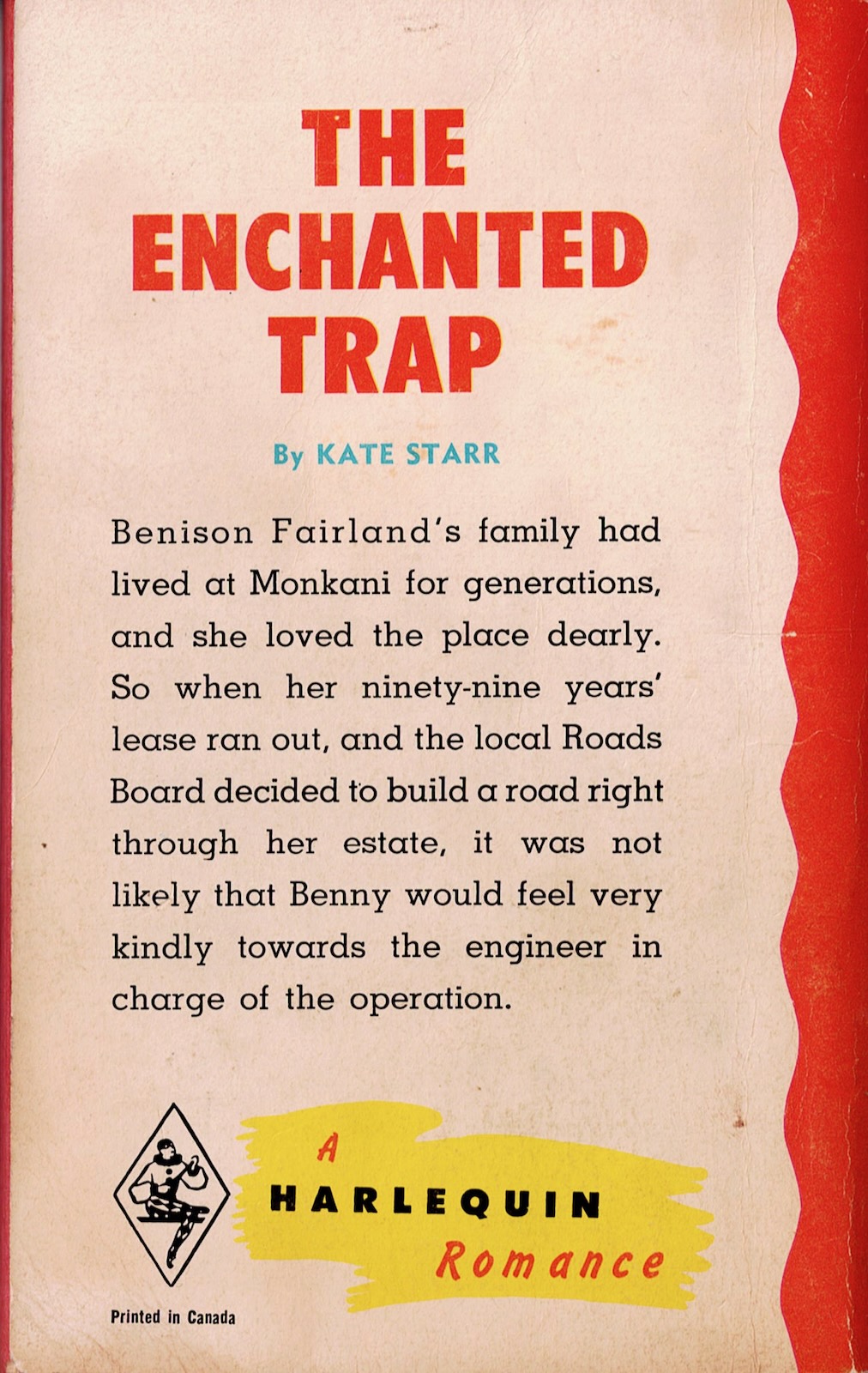
the enchanted trap Harlequin by Kate Starr 1963 edition

In the case of the Enchanted Trap, it’s both – a hotel for children whose parents are going abroad for a month or so. 

 A kennel for children. 

The house is called Monkani and it sits on a parcel of land needed for a road. Why the road has to go right through the house and not around it is unclear. 

Monkani means ‘many thanks’ in the aboriginal language of the Australians who lived there when the house went up 120 years before, when the land was granted to ther heroine’s great-great grandfather by the government in thanks for the discovery of silver. Many thanks!

Kathy Starr’s prose is terribly good.

Listen to this intro.
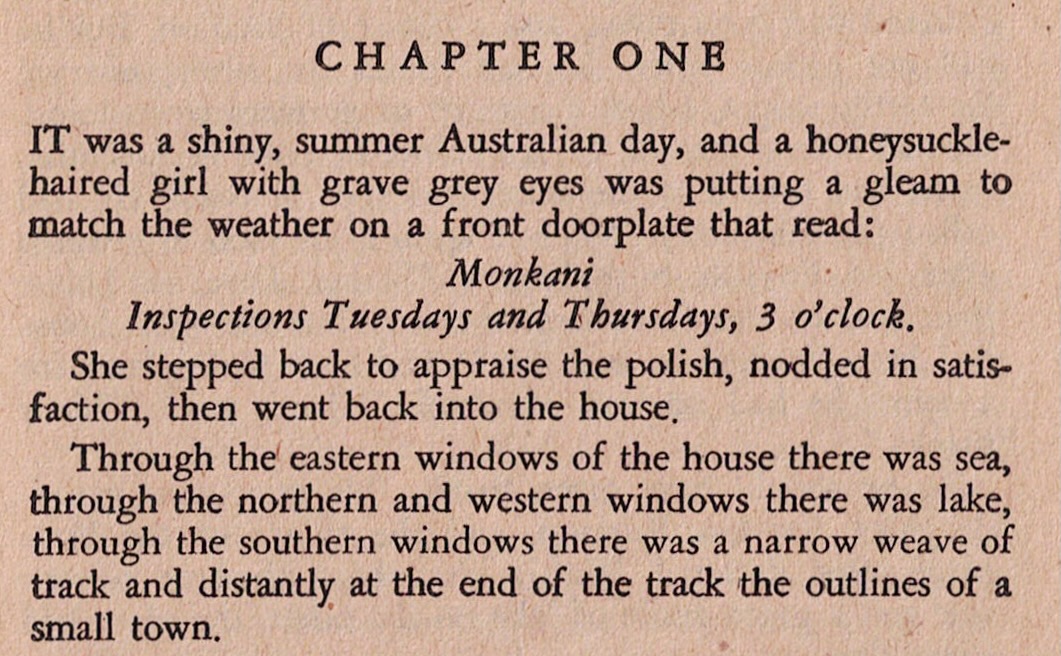
the enchanted trap Harlequin by Kate Starr 1963 edition

But the man is Not Nice.

Yes, he has a way with the children staying at the hotel, so the reader is meant to recognize a tender heart beneath, but he uses his physicality to brow beat and disarrange the heroine. 

I don’t like it when a man squeezes a woman’s shoulder until it hurts to make her do something she doesn’t want to do or picks her up bodily to take her somewhere she doesn’t want to go. Especially in real life, and not in a romance novel. 

But I kept reading because the heroine is strong in more interesting ways than muscle. 

Benison “Benny” Fairland decides to charm Dominic Boyd the road builder and make him believe through repeated bouts of subtle interest cunningly withdrawn that she is submitting to his bulldozer. 

There is very often a moment in these old texts where the author has the hero say something that doesn’t time-travel well, like this:

For a moment you forgot and followed your heart and not your mind…Admit it, now. Admit, too, Benison Fairland, that deep, deep down you’re not really resenting all of this as you’re so obviously trying to. That, like the rest of your sex, you fundamentally prefer to be regulated and controlled.”
This time she could not plan any answer, she simply had to burst out. “You — you—“ she flung, as red in the face as the red handkerchief round the neck of the man in the electric drill. 
“All women like authority,” he said kindly. He lit a cigarette. “Don’t explode,” he advised her. “I like you nice and intact as you are, not disintegrated. I’ve enough disintegration on my road.

A lot to unpack. At least he doesn’t want her ground up. 

This exchange is followed by another moment when he picks her up and for the second time in the book’s first act carries her against her wishes. 

So.

What is the reader supposed to make of Benny’s impotence in the face of Dom’s authority?

Really hard to say.

Am I supposed to feel the feminist in her inarticulate rage? And/or should I find Dom’s appeals to her heartfelt desire to be controlled exciting. At this point in the book, I have no idea. 

Kate Starr, the author has made the heroine impotent in so many ways that I wonder if Benny can only come out on top in the end. Otherwise, what’s her trajectory? Could it be that she starts out a “fish-spinster” resisting the patriarchy, and turns into a submissive guppy?

Alas, it ends with a ritualistic finale for this era’s romance: the heroine wins, but only by getting the chance to destroy the thing she holds most dear by her own hands, a sacrifice for the evidence bag of love. 

And in 1963, no sex. Not even as awesome make out session.

I read it all the way through, but in the end two thumbs down. 
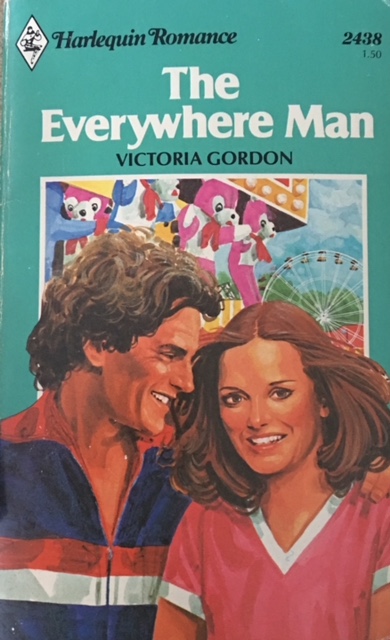
Review – The Everywhere Man – Victoria Gordon (1981)

14 Sunday Jun 2026

Posted by Giulia Torre in feminism, Giulia Torre, Harlequin Romance, vintage romance review

≈ Leave a comment

Tags

category romance, Harlequin, harlequin romance, Mills and Boon, romance, romance novel reviews, romance reviews, sexual harassment

In honor of all the women who in 2017 fundamentally changed the conversation around sexual harassment, in honor of all the women who for a hundred years prior tried and failed, and in honor of those of us to come who will still speak truth to power, even in the face of new ASAP legislation (I speculate here) that will make accusing a white man of anything at all a criminal offense…I give you The Everywhere Man.

the everywhere man

Because, even if she claims she doesn’t, every woman wants a stalker.

Set in Australia, Alix is an architectural draftswoman with a talent for design and training German Shorthaired Pointers. Alix lost both her parents to a bushfire two years before, a sad fact that serves to motivate our heroine, at the awfully familiar sound of an Australian bushfire, out of the bush onto a busy highway at warp speed. She swerves into a ditch to avoid the hero. In the midst of an angry man rescue, she faints (ffs).

“Obnoxious, arrogant, conceited” Quinn Tennant pulls her out of the ditch. After Alix fails to show proper gratitude, Quinn asks, “Is it part of some Women’s Lib programme to be ungrateful, stroppy, and generally disagreeable?” (p. 17). Expressly claiming payment, he kisses her with “no crude savagery. Only a vast knowing” (p. 18, italics belong to the author). She tries and fails to claw-slap him (“Naughty, naughty” he chides), which is followed by laughter: “Why not relax? You’ve only one more kiss to finish the debt” (p. 19).

The professional rapes described in the story are metaphoric in scope. Victoria Golden, author of Always the Boss (1981) and Age of Consent (1985), among other 80s category romances, is presumably familiar with the issues of sexual predation in and out of the workplace.

Alix’s former fiancee and co-worker, a threadbare stereotype, steals her designs. New hero Quinn Tennant is not only her judge in dog shows, the landlord of her rented cottage, but also her boss. I won’t go into the details of the now-dated professional set-up for the central love scene. It includes a hotel suite, a drink in the boss’ face, a naked roll across the vast bed, an “athletic” dismount from the mattress, followed by a “sprint for the doorway”  (p. 114). Alix’s virtue remains intact because heroines can be out-and-out shrews when confronted with deflowering.

Fast forward through more dog shows to the happily-ever-after: The two are engaged to be married, and Quinn reveals he’s rescued Alix’ stolen designs. She promptly rips the short stack of drawings in half and quarters, saying “these are from the past; they don’t matter now” (p. 189).

What woman would rip up her original drawings? Who would expect her to?

It may mean nothing, but author Victoria Golden is a man, and the a.k.a. was born in response to the publisher’s claim that “no man” could write Harlequin category romance: “Gordon is widely believed to be the first man to seriously meet the challenge.”

I ask myself: is it one thing when readers consume toxic romance narratives imagined by other women, but another thing entirely when they’re crafted by a man (pretending to be a woman)?

My students tell me that it seems sometimes that I love these books, and sometimes that I hate them. Rarely in life am I this conflicted. True, someone can offer me one drink or another, and, faced with a hard choice, I’ll end up with both.

So I’ll end up with both here…

I love romance.

I hate this book.

Enjoy old-school historical romance? Me too! Start with Wolfe Island. It’s available in paperback, ebook, and Audible.

Sign up for more vintage romance reviews. Subscribe to Giulia’s newsletter! I read and write romance and could talk about either, all day long.

Giulia Torre on Facebook

Giulia Torre on Facebook

Pages

  • about
  • books
  • contact & subscribe

Archives

  • June 2026
  • May 2026
  • March 2026
  • December 2025
  • September 2025
  • August 2025
  • November 2017
  • October 2017
  • September 2016
  • December 2015
  • October 2015
  • June 2015
  • May 2015
  • February 2015
  • January 2015
  • November 2014
  • October 2014
  • September 2014
  • August 2014

Enter your email address to follow this blog and receive notifications of new posts by email.

Goodreads

Blog at WordPress.com.

  • Subscribe Subscribed
    • GIULIA TORRE
    • Already have a WordPress.com account? Log in now.
    • GIULIA TORRE
    • Subscribe Subscribed
    • Sign up
    • Log in
    • Report this content
    • View site in Reader
    • Manage subscriptions
    • Collapse this bar

Loading Comments...